





Ram Rumble Bee vs. Ram TRX: Street Muscle or Off-Road Muscle?
Ram now has two very different answers to the same performance-truck question: do you want your pickup built to attack rough terrain, or built to own the pavement?
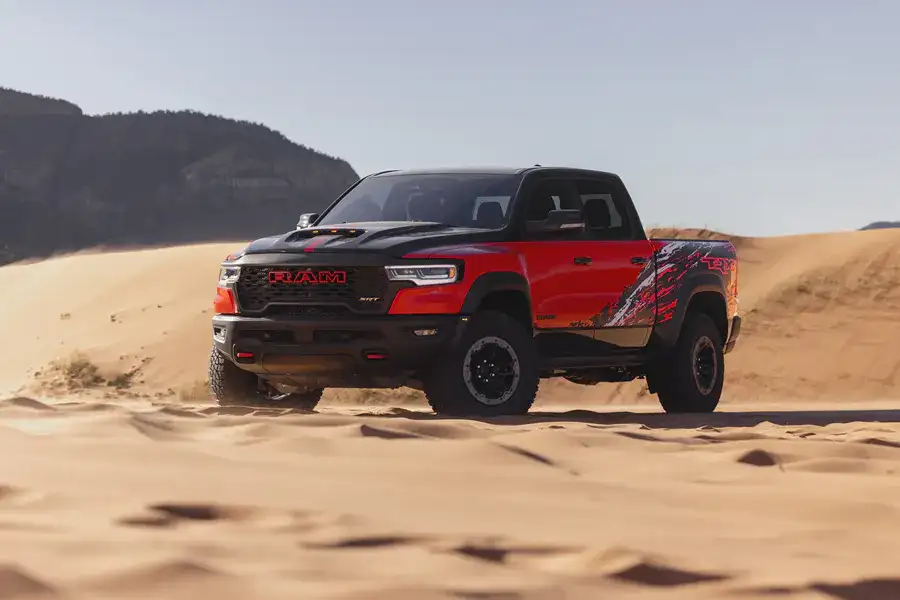
The Ram 1500 TRX SRT is the off-road-performance answer. The Ram 1500 Rumble Bee is the street-performance answer. Both lean into big-power Ram attitude, but their personalities are not interchangeable. The TRX is about ground clearance, suspension travel, terrain modes, and high-speed off-road confidence. The Rumble Bee is about a lower, wider stance, pavement grip, braking power, launch control, and modern muscle-truck energy.¹ ²
That difference is what makes this comparison more interesting than a horsepower contest.
Ram Rumble Bee vs. Ram TRX: The Main Difference
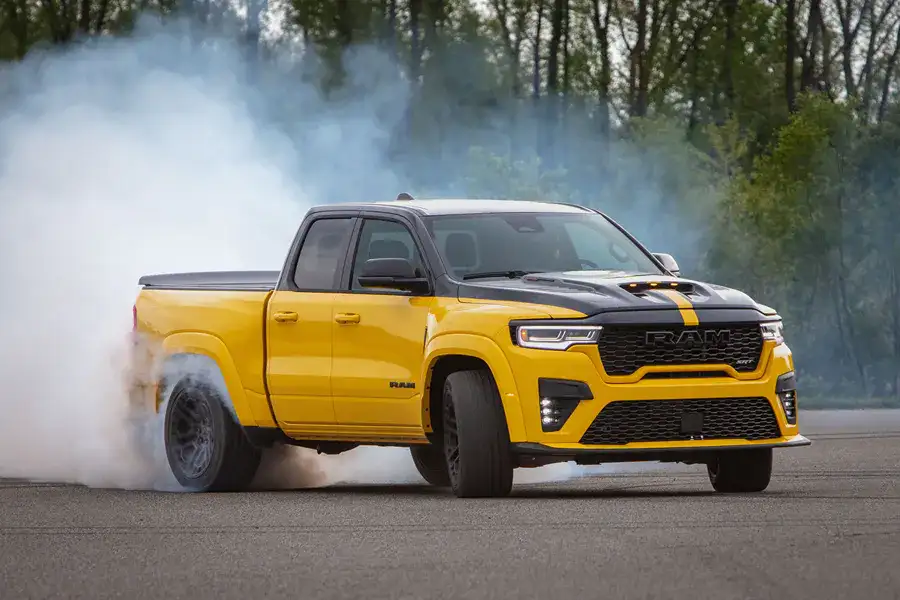
Rumble Bee
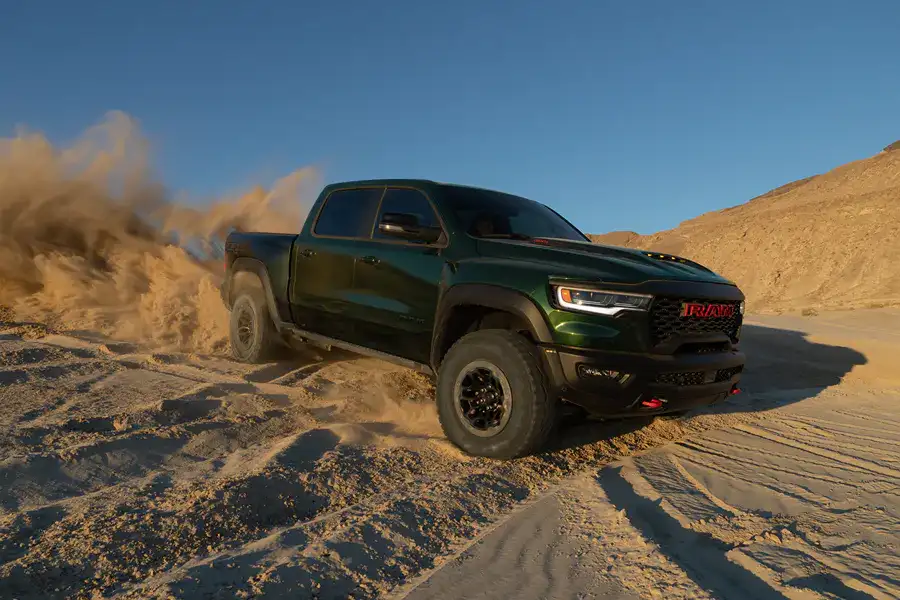
TRX
The Ram Rumble Bee is built around street performance, while the Ram TRX is built around off-road performance.
That sounds simple, but it changes almost everything about how each truck is meant to feel. The TRX has the stance and hardware of a truck that wants rough terrain, loose surfaces, deep snow, and fast off-road runs. The Rumble Bee has the proportions and equipment of a truck that wants grip, response, stability, and drama on pavement.
One is the Ram for drivers who want their truck to feel unstoppable when the road gets messy. The other is the Ram for drivers who miss the street-truck era and want muscle-car attitude with a bed behind the cab.
Let Us Know if You’re Interested in a Rumble Bee or TRX
Same SRT Energy, Two Different Missions
The TRX SRT and Rumble Bee SRT both bring serious performance credentials, but Ram points them in different directions.
The TRX SRT uses a supercharged 6.2-liter HEMI V8 rated at 777 horsepower and 680 lb-ft of torque. Ram lists a 3.5-second 0–60 mph time, a 12.2-second quarter-mile time, and a 118-mph top speed. More importantly for its mission, the TRX also brings 11.8 inches of ground clearance, 13 inches of front suspension travel, 14 inches of rear suspension travel, Bilstein Black Hawk e² shocks, and drive modes for conditions such as Snow, Mud/Sand, Rock, Baja, Tow, Sport, Auto, Custom, and Valet.²
The Rumble Bee SRT uses the same peak output rating of 777 horsepower and 680 lb-ft of torque, but the supporting hardware tells a different story. Ram lists a 3.4-second 0–60 mph time, an 11.6-second quarter-mile time, and a 170-mph top speed. The Rumble Bee is described as wide and low, with a Quad Cab short bed layout, 88-inch stance, shorter wheelbase, available 4-corner air suspension, Track Mode, Launch Control on SRT and 392 Track Pack models, Brembo braking hardware, and ultra-high-performance tires on the SRT and 392 Track Pack.¹
The numbers are close enough to invite comparison. The missions are different enough to make the choice personal.
The Rumble Bee Brings Back the Street Truck
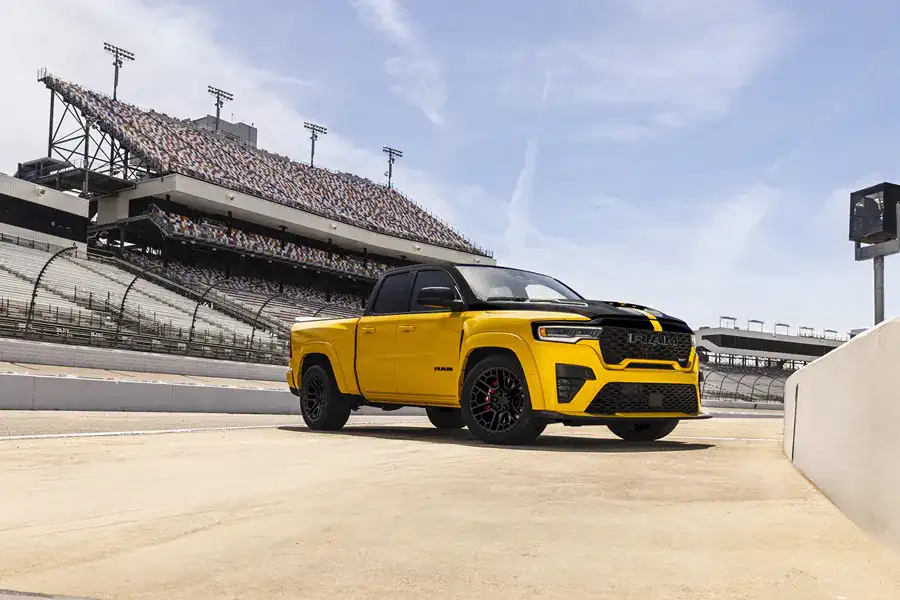
For years, the performance truck world has leaned heavily toward off-road capability. That makes sense. Trucks naturally connect to ground clearance, traction, toughness, and the ability to handle bad weather, uneven surfaces, and hard use.
The Rumble Bee brings back a different kind of performance-truck identity: the street truck.
A street truck is not trying to be a sports car, and it is not trying to be an off-road racer. It lives somewhere between muscle car and pickup. It has the presence of a truck, the practicality of a bed, and the emotional pull of big power, bold sound, wide tires, and a stance that looks ready to launch from a stoplight.
That is why the Rumble Bee feels meaningful. Ram did not simply bring back a badge. It created a street-performance truck family with a clear personality: low, wide, loud, and built around pavement performance.¹
The TRX Still Owns the Off-Road Performance Lane
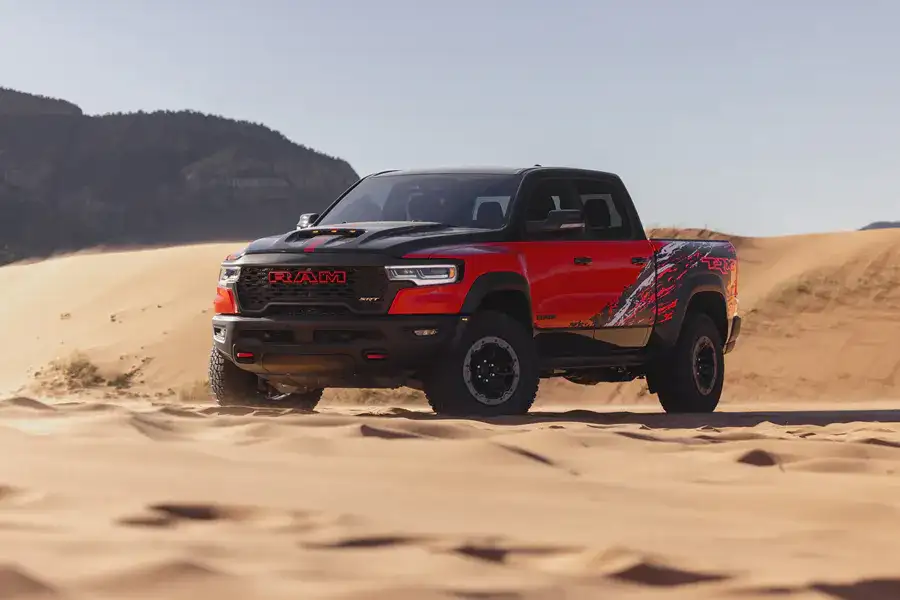
The TRX SRT is the more natural choice for drivers who want their performance truck to feel at home when pavement ends or winter roads get rough.
Its off-road case is not built on horsepower alone. Ground clearance, long suspension travel, Bilstein shocks, off-road-focused drive modes, and Selec-Speed Control all support the TRX mission.² That matters in northern Vermont, where a performance truck may still be asked to handle snowy drives, rough access roads, muddy spring conditions, and weekend trips where pavement is only part of the route.
If your idea of a performance Ram includes winter trips to Canada, rougher access roads, camp roads, or weather that makes extra clearance feel like a luxury, the TRX speaks your language.
The Rumble Bee may be fast, wide, and powerful. The TRX is the one built to stay comfortable when the surface gets ugly.
The Rumble Bee Is About Pavement Control
The Rumble Bee’s biggest story is not just speed. It is control at speed.
That matters because turning a pickup into a credible street-performance machine is not simple. Trucks are tall, wide, heavy, and naturally less aerodynamic than performance cars. Big horsepower gets attention, but braking, tire grip, suspension tuning, airflow, and body control decide whether the truck feels composed when the pace picks up.
Ram’s Rumble Bee details point directly at that challenge. The shorter wheelbase is there for sharper maneuverability. The wide stance supports stability. Track Mode adjusts major vehicle systems for performance driving. Launch Control manages torque delivery, wheel slip, and shift timing. The front splitter helps keep the truck planted at high speed. Brembo six-piston front caliper brakes add serious stopping hardware.¹
That is the difference between a fast truck and a muscle truck. The Rumble Bee is not trying to be a TRX with street tires. It is trying to revive a performance pickup formula that many enthusiasts thought had disappeared.
Why Ram Built Both Instead of One Performance Truck
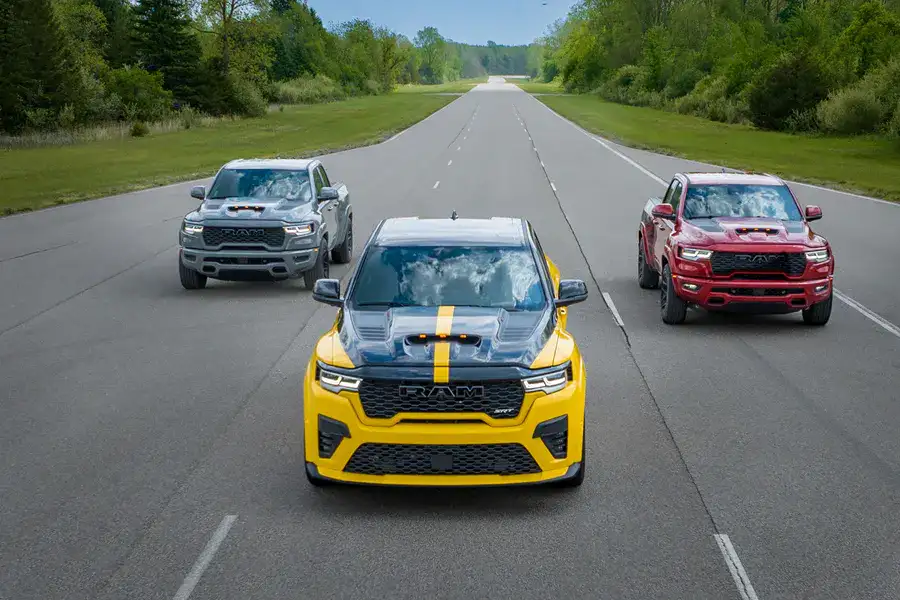
Ram did not need two extreme performance trucks unless it believed there were two different kinds of performance-truck buyers.
The TRX buyer wants capability with real-world confidence and unmistakable presence. They want the height, width, sound, suspension, and off-road hardware that make the truck feel ready for snow, mud, rough roads, and open terrain. The Rumble Bee buyer wants attitude with precision. They want the sound and drama, but they also want a truck that looks planted, corners flatter, launches hard, and feels more connected to pavement.
That split makes sense. A truck can be emotional in more than one way. Some drivers want to throw dirt. Some want to pull hard through a clean stretch of pavement. Some want the most aggressive off-road Ram they can buy. Others want a modern answer to the old street-truck formula.
Ram is no longer asking those shoppers to want the same thing.
What Enthusiasts Are Already Debating
The Rumble Bee announcement sparked more than spec-sheet reactions. Enthusiasts are already debating the details that affect identity and ownership: the Quad Cab short bed layout, whether a single cab would have felt more traditional, whether a Crew Cab would have been more practical, how attainable the 5.7-liter version might be, and whether the 392 could become the sweet spot of the lineup.³
Those debates are useful because they show what people actually care about. Horsepower starts the conversation. Cab layout, price expectations, trim strategy, daily usability, and emotional fit keep it going.
The Quad Cab short bed choice may be the best example. A single cab would have leaned harder into old-school street-truck fantasy. A Crew Cab would have leaned harder into family practicality. The Quad Cab short bed gives Ram a middle path: more usable than a pure toy, tighter and more visually athletic than a full-size family hauler.
That middle path is exactly what separates the Rumble Bee from the TRX. The TRX is built around capability first. The Rumble Bee is built around proportion, stance, and street presence.
Which Ram Performance Truck Fits Daily Driving Better?
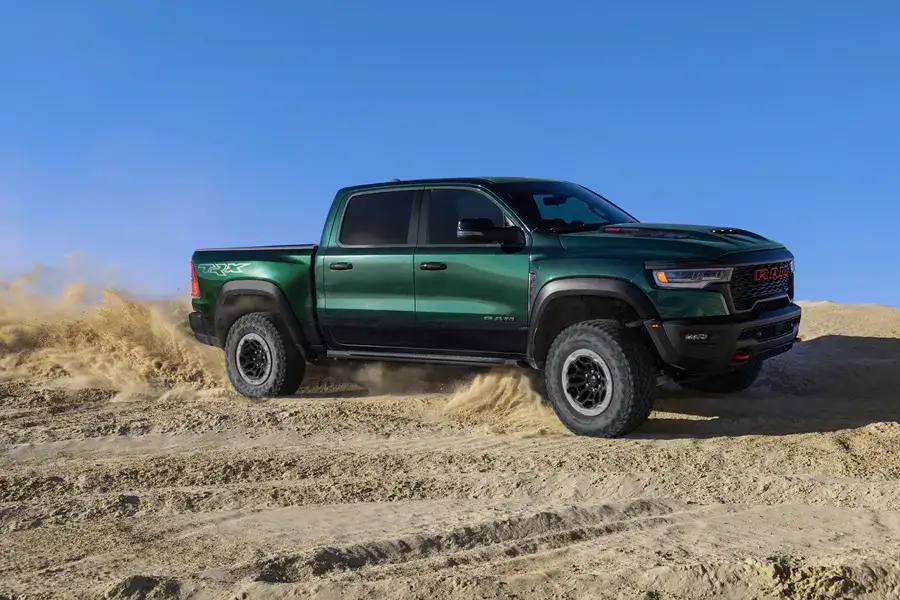
The answer depends on what “daily driving” means to you.
The Rumble Bee may feel more natural for drivers who spend most of their time on pavement and want a truck that makes ordinary drives feel less ordinary. Think VT-36 toward St. Albans Bay, VT-104 outside town, or a quick run through downtown before heading toward Lake Champlain. Those are the kinds of drives where a lower, wider, street-focused truck makes emotional sense.
The TRX may feel more natural for drivers who want performance without giving up rough-weather confidence, higher clearance, and off-road-tuned hardware. It is the better fit for shoppers who care about snow, mud, uneven roads, and the kind of weekend use where a low street truck might feel out of its element.
Neither answer is wrong. The better choice depends on whether your truck life is more pavement-first or terrain-first.
Is the Rumble Bee Faster Than the TRX?
Based on Ram’s current figures, the Rumble Bee SRT is quicker and faster in the pavement-performance metrics Ram has published. Ram lists the Rumble Bee SRT at 3.4 seconds from 0–60 mph, 11.6 seconds in the quarter mile, and 170 mph top speed. The TRX SRT is listed at 3.5 seconds from 0–60 mph, 12.2 seconds in the quarter mile, and 118 mph top speed.¹ ²
That does not make the Rumble Bee “better” than the TRX. It makes it better aligned with high-speed street performance.
The TRX is not chasing the same top-speed mission. It carries off-road suspension, ground clearance, and terrain-focused tuning that serve a different purpose. The Rumble Bee is built to put Ram muscle-truck performance on pavement. The TRX is built to make absurd power useful where the road surface fights back.
Which One Should Ram Fans Watch?
The TRX is already easy to understand. It is the extreme off-road Ram, now with even more power and a refreshed SRT identity. The Rumble Bee is the more intriguing unknown because it could reopen a truck category that has been quiet for years.
That is why the Rumble Bee may become the bigger conversation among enthusiasts. Not because it replaces the TRX, but because it gives Ram fans a second kind of dream truck.
The 5.7-liter Rumble Bee could be the emotional entry point. The 392 could become the enthusiast sweet spot. The SRT will be the headline machine. Together, they suggest Ram is not treating street-truck performance as a one-off nostalgia move. It is building a ladder.
Street Muscle or Off-Road Muscle?
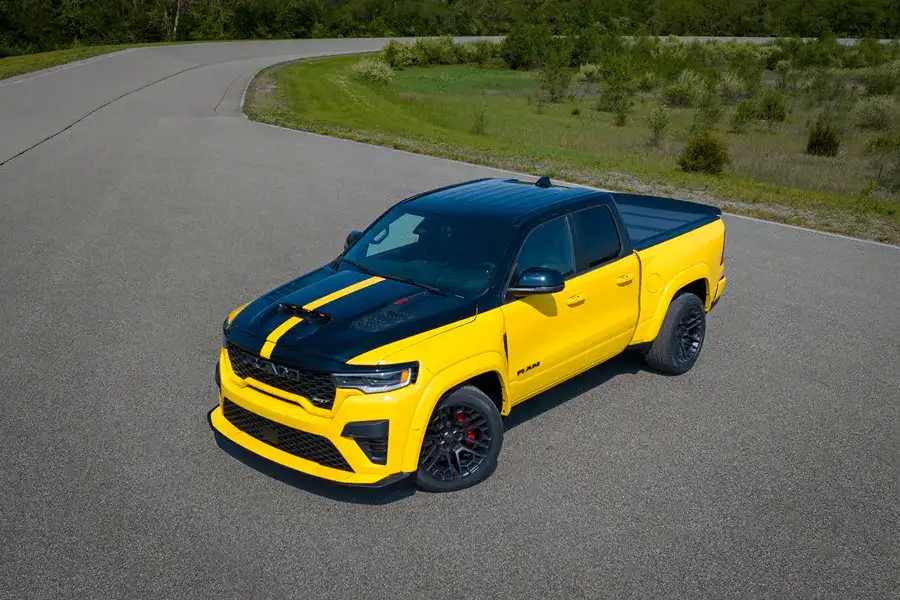
Rumble Bee
TRX
The Ram Rumble Bee vs. Ram TRX comparison comes down to mission.
Choose the Rumble Bee mindset if you want:
- Street performance as the main attraction
- A lower, wider, more muscle-truck look
- Launch Control, Track Mode, big brakes, and performance tires
- A pickup that feels closer to a modern muscle car
- Ram attitude built for pavement, stance, and speed
Choose the TRX mindset if you want:
- Off-road performance as the main attraction
- More ground clearance and suspension travel
- Bilstein shocks and terrain-focused drive modes
- A taller, more aggressive off-road stance
- Ram attitude built for snow, mud, rough roads, and high-speed off-road confidence
The best part is that Ram does not have to choose one identity anymore. The TRX keeps the brand’s off-road-performance flag planted. The Rumble Bee brings street-truck swagger back into the showroom conversation.
For Ram fans, that is the win. Performance trucks are no longer just about who has the biggest number on the spec sheet. They are about what kind of performance makes you look back after you park.
As Ram releases more Rumble Bee details, Nucar Chrysler Dodge Jeep Ram of St. Albans can keep you informed. Contact our team to compare current Ram 1500 options, ask about future Ram performance-truck updates, or start planning your next truck with a local dealership where Everyone Loves A Nucar!
0 comment(s) so far on Ram Rumble Bee vs. Ram TRX: Street Muscle or Off-Road Muscle?